Before this journey, her life had looked very different. She had moved to Stockholm from Karlstad as an eighteen-year-old, determined to become a freelance photographer. She worked as an assistant, attended photo school, and eventually built a career shooting for the music industry. By 2007 she had started her own company. She had a three-year plan, a five-year plan, a ten-year plan. On paper, everything was moving forward. In reality, something was coming undone.
Around the time she turned thirty, the cracks became harder to ignore. The music industry meant late nights, constant festivals, a lifestyle that blurred the line between work and excess. She wasn't feeling well. She sought help. And then, somewhere in the middle of all that restlessness, she stumbled upon the trailer for the film Wild.
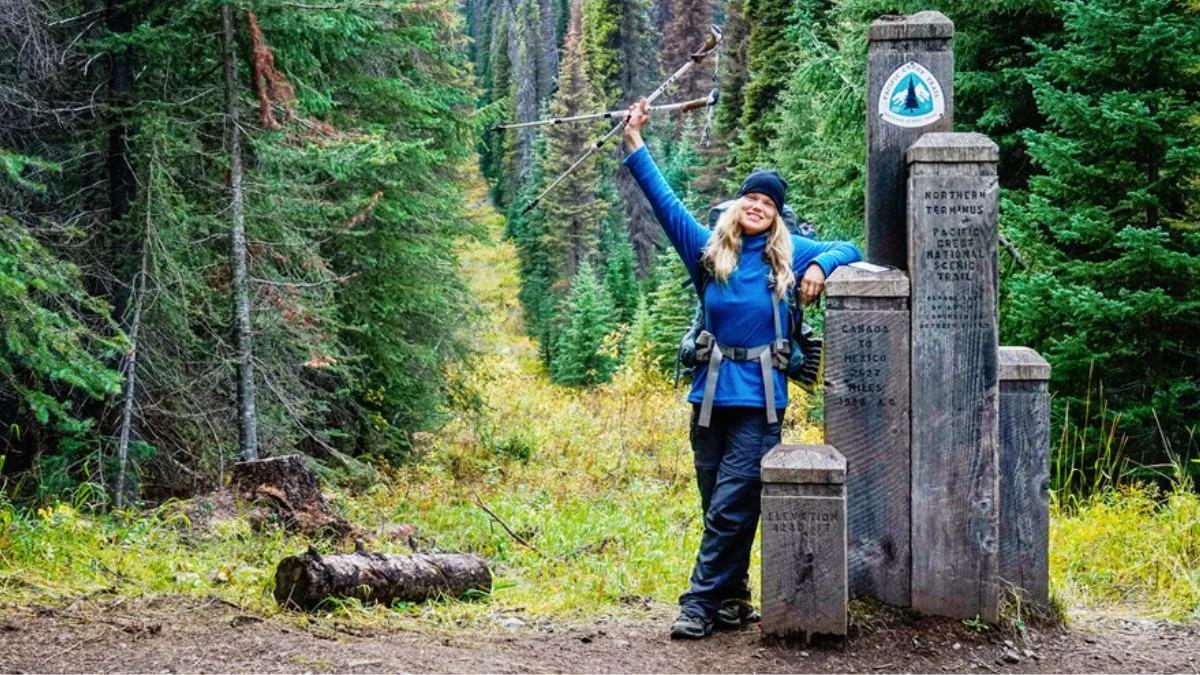
She watched it once. Then again. Then again. The idea of carrying only what you need on your back, of stepping away from everything and just walking; it lodged itself in her mind and refused to leave. The film depicted the Pacific Crest Trail, and the more she read about it, the more documentaries she watched, the more she couldn't let it go. By the summer of 2015, she flew to the United States and hiked two sections to test herself. She also visited the southern monument at the Mexican border, and standing there, she felt that of course she would one day do the whole trail.
In April 2016, she began walking. She wouldn't stop until September, covering the entire trail from Mexico to Canada, using every last day of her six-month visa.
The decision to go had been the hardest part. She had a rare fixed freelance gig: two days a week, the kind of stability that barely exists for freelancers, and walking into that office to say she was leaving felt terrifying. But when she told her boss, the response was simply acceptance, and when she returned, the work was still there waiting for her. Things, as she had started to suspect, had a tendency to fall into place once you committed.
She prepared meticulously. She mapped every resupply point, read every guidebook she could find, joined a winter snowshoe trip to learn about cold-weather camping, and started walking to work with a loaded backpack. She emptied her savings. Her apartment happened to be scheduled for renovation during exactly those six months: no rent to pay. Luck, perhaps, or what happens when determination meets opportunity.
On the trail, she started slow: ten miles a day, and built up gradually. She took nearly a month of rest days across the half year. She split the massive distance into small pieces: the next water source, the next lunch spot, the next town. "The step I was most proud of having taken wasn't taken on the trail," she reflected afterward. "It was taken several months before and several hundred miles away. Actually deciding to do it: that's the step to take."
She came home changed. She trusted herself differently. She needed less control. She began writing: two blogs, including one for the travel magazine Vagabond, and discovered a creative voice she hadn't known she had. The rigid career plans that had once hemmed her in were replaced by a single principle: say yes to what feels genuinely exciting, and stop waiting for permission.
Her advice to anyone circling a dream like this is disarmingly simple: stop deliberating. Make a budget. Book the ticket: pick a date and let that deadline force everything else into motion. Do a test trip with your actual gear. Research thoroughly, then be willing to throw the plan away when something better appears. "The unplanned tends to create the best memories," she said. "Planning is incredibly important, but it's also important to be able to let go of the plan."
The trail taught her that the brain's job is to keep you safe, to hold you where things are familiar. Growth requires overriding that instinct. Not recklessly, but deliberately, with preparation and then trust.
The first step is never taken on the trail. It's taken the moment you decide to go.
Top tips from Linda